ePBS, short for enshrined Proposer-Builder Separation, is the headline consensus-layer change in Ethereum’s Glamsterdam upgrade. At first glance it looks like a fix for a trust problem in how blocks get made. Its bigger payoff is quieter: it gives every node more time to check each block. More time means Ethereum can safely make blocks bigger.
This piece explains both halves in plain terms: who makes Ethereum’s blocks today, what goes wrong, what ePBS changes, and why that unlocks more throughput.
Many thanks to Nic for contributing this piece. ❤️
Who Builds Ethereum’s Blocks Today?
Every 12 seconds, one randomly chosen validator gets to publish the next block. We call it the proposer. Deciding what goes inside the block, and in what order, is where the money is: reordering trades, catching arbitrage, and other tricks known as MEV (maximal extractable value).
If validators had to compete on MEV themselves, the ones with the best engineers and fastest servers would earn the most and grow the biggest. Over time the validator set would centralize. To avoid that, Ethereum’s community split the job in two. This split is called Proposer-Builder Separation (PBS):
Builders are specialized firms that assemble the most profitable block they can.
Proposers simply pick the builder that pays them the most, and publish that block.
Being a proposer stays simple enough to run at home. The hard, competitive work moves to builders.
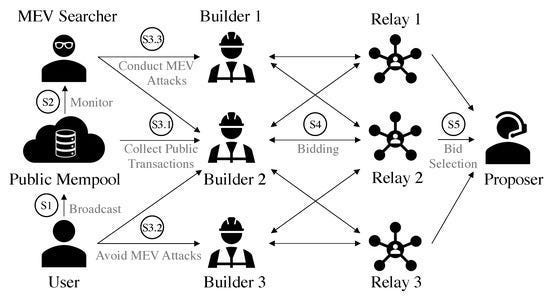
Today this happens through an off-chain supply chain, most commonly via software called MEV-Boost:
Searchers scan pending transactions for profitable opportunities and send bundles to builders, paying to have them included.
Builders combine those bundles with ordinary transactions into the most valuable block they can, then bid for the right to have it published.
Relays collect the bids and pass the best ones to the proposer.
The proposer picks the highest bid, and that block becomes the next block on Ethereum.
Builders and proposers don’t trust each other, and for good reason:
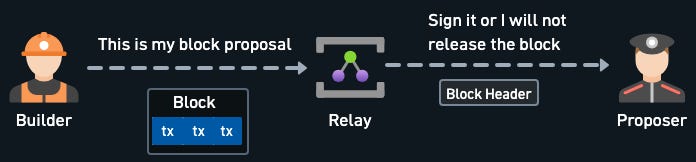
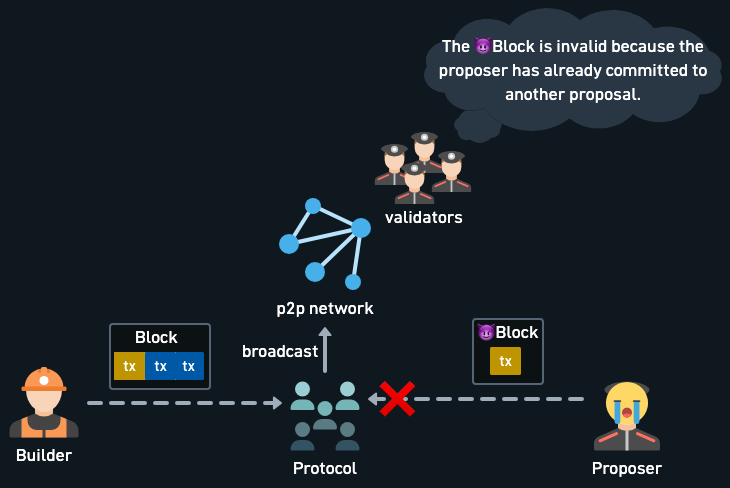
If a builder shows its block to the proposer first, the proposer could copy the profitable trades and keep the money.
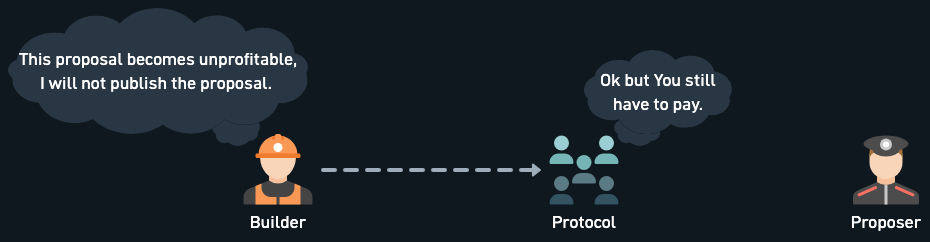
If the proposer commits to a builder’s block first, the builder could fail to deliver it. The proposer then misses its slot and loses its reward.
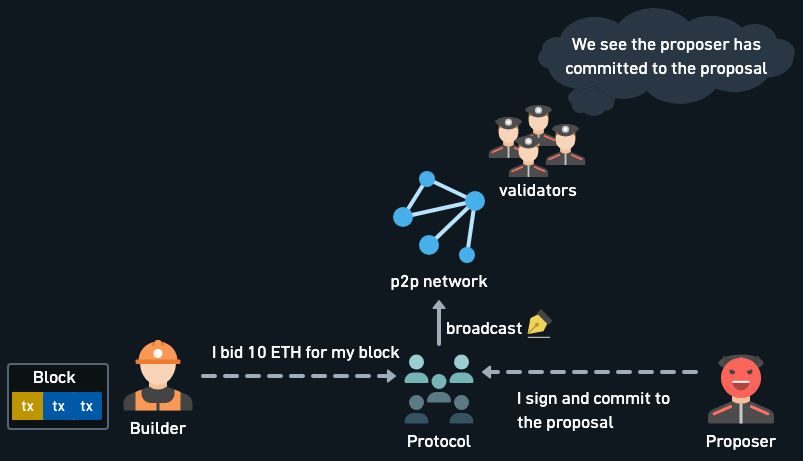
The relay solves this like an escrow agent. The builder hands its block to the relay. The proposer signs a commitment to the bid without ever seeing the contents. Only then does the relay publish the full block. Neither side can cheat the other, as long as the relay is honest.
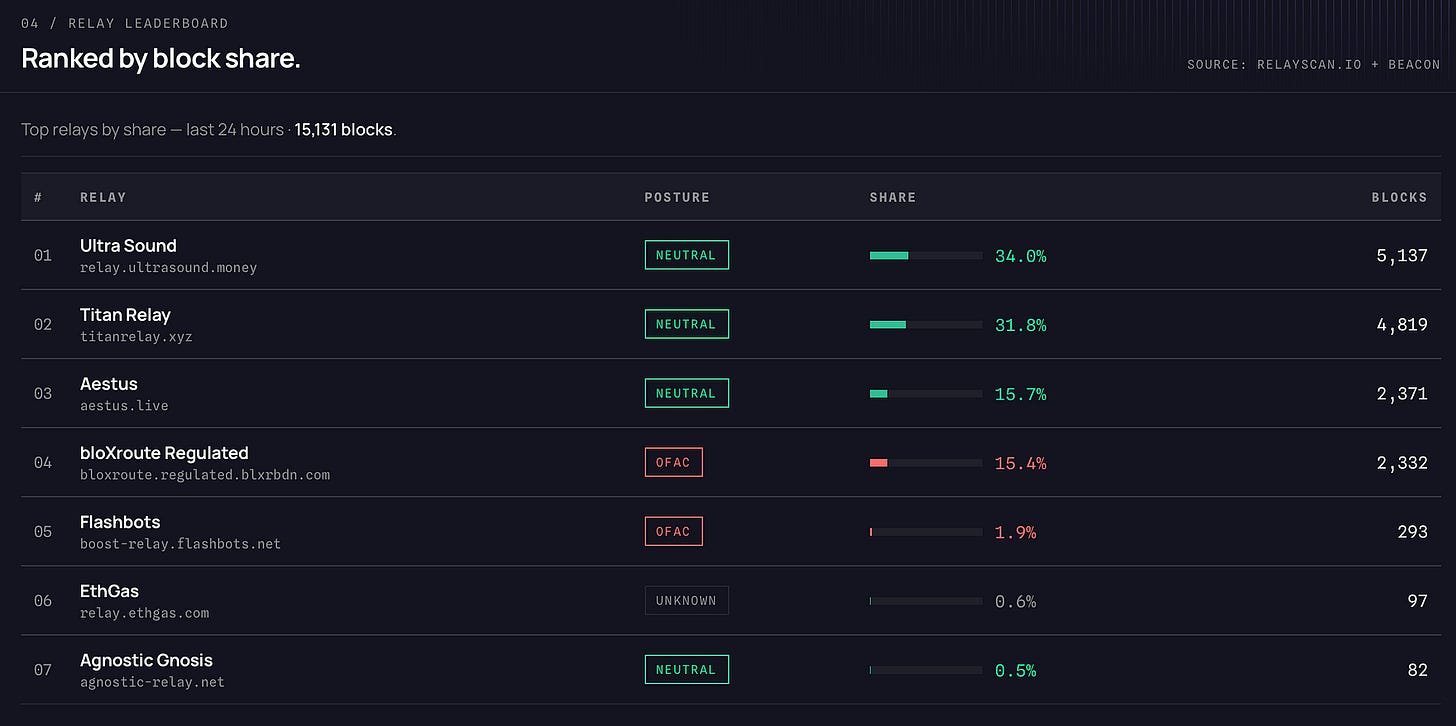
That last condition is the problem. Both sides must trust a handful of relay operators, which is exactly the kind of central point Ethereum tries to avoid.
Relays also sit at the heart of a speed race. Bids change by the millisecond, so builders pay to place their servers right next to relays, and relays pay for expensive infrastructure to stay competitive. Speed races like this reward a few big players and push the market toward centralization.
Even so, running a relay is a hard business. Relays must spend heavily to be fast and reliable, but any fee they charge makes their bids less competitive. Several relays have already shut down.
What ePBS Changes: The Protocol Becomes the Referee
“Enshrined” means written into Ethereum’s own rules. Before ePBS, the protocol only knew about proposers. Builders and relays lived entirely outside it. After ePBS, builders become official participants, and the protocol itself takes over the relay’s main job: making sure neither side can cheat the other.
It can’t hold a builder’s block in escrow, though. So it uses different tools.
If the builder cheats
A builder might win the auction, then see its trades lose value at the last second and decide not to release its block. Today the relay prevents this by holding the block. Under ePBS, the rule is simpler: once your bid is accepted, you pay, whether or not you deliver.
The proposer keeps both its reward and the builder’s payment. A builder who walks away only loses money.
If the proposer cheats
A proposer might try to peek at a builder’s block and then sink it. For example, it could publish its own block very late so the network ignores it, then quietly reuse the builder’s trades.
ePBS splits the process into two steps:
The proposer publishes its signed choice of bid first.
The builder waits until enough validators have seen and voted for that choice. Only then does it reveal its block.
By the time the builder’s contents are public, the network has already locked in the proposer’s choice. Undoing it would require controlling a large share of the voting validators.
Splitting the Block in Two
Every Ethereum block has two parts:
The consensus block, the small header-like part that validators vote on. Under ePBS it carries the proposer’s chosen bid.
The execution payload, the heavy part with all the transactions, built by the builder.
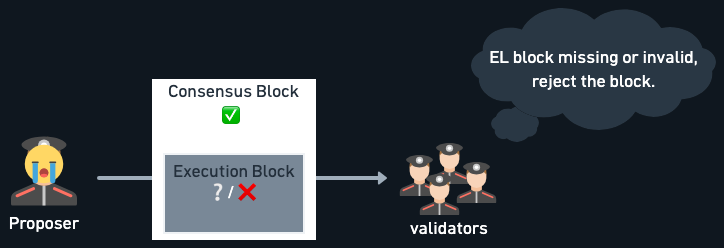
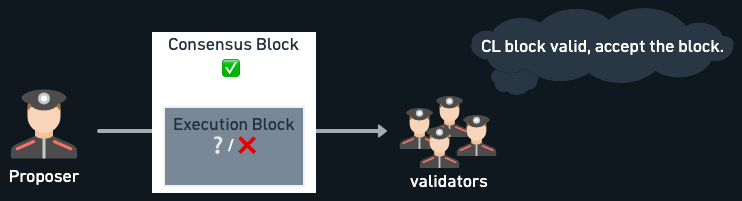
Today the two are glued together. If the payload is missing or invalid, the whole block counts as if the proposer never showed up. ePBS judges the two parts separately. Validators vote on whether the consensus block is valid, and the payload no longer affects that vote. This separation is what makes “pay even if you don’t deliver” work: the proposer’s block stands, and the builder’s payment goes through.
Before ePBS, a consensus block is rejected if its execution payload is missing
After ePBS, a consensus block remains valid even if its execution payload is missing
It does create a new question: did the payload actually show up on time? If some validators saw it and others didn’t, they could disagree about the chain and cause a fork.
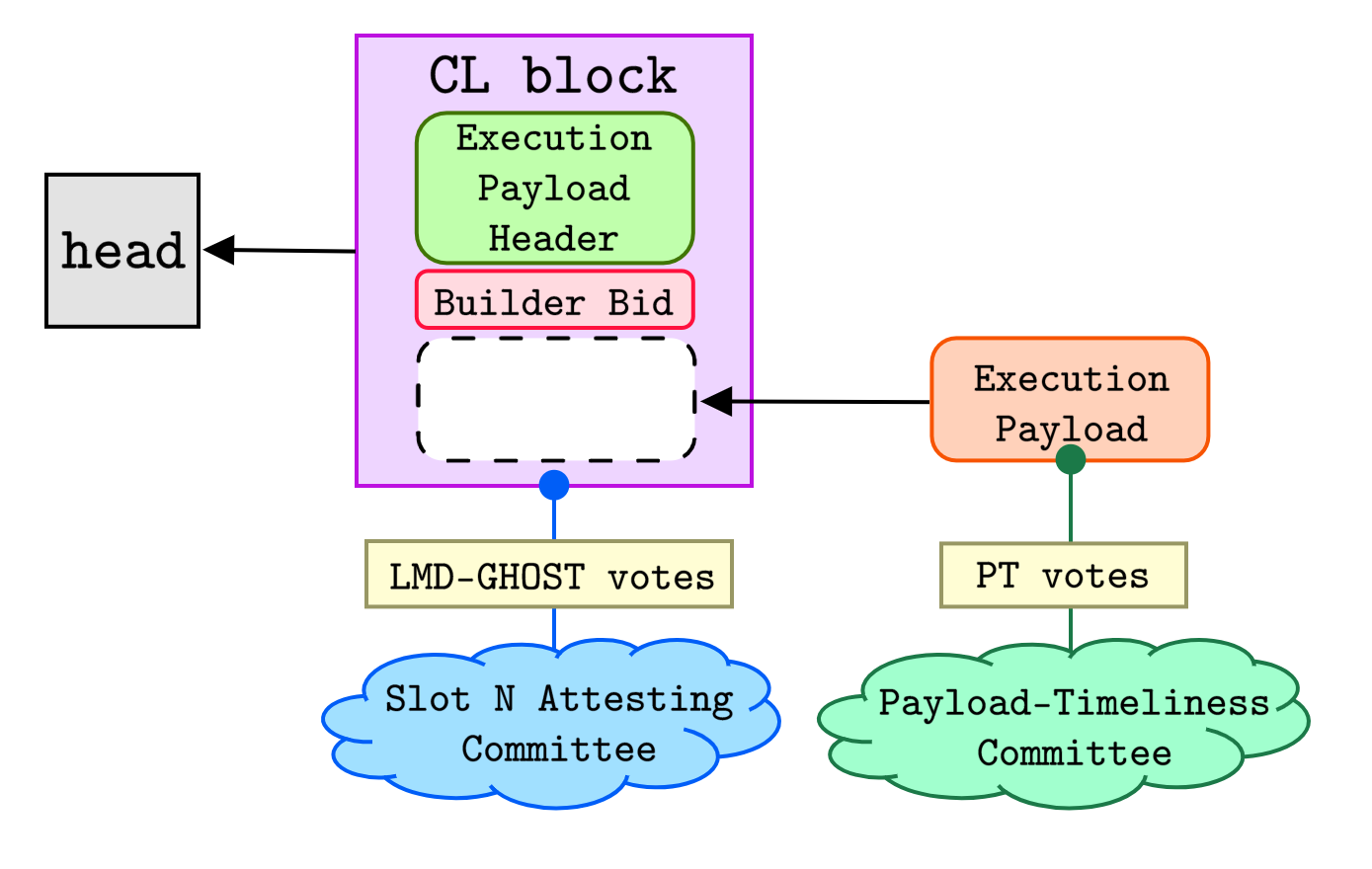
To settle this, ePBS adds the Payload Timeliness Committee (PTC). Each slot, a fresh random group of 512 validators votes on one thing only: did the payload arrive in time? The majority answer becomes the network’s answer. Regular validators keep voting on the consensus block, and the PTC handles the payload.
A new committee, the PTC, votes on whether the execution payload arrived on time. source
The Bigger Prize: Using the Whole 12 Seconds
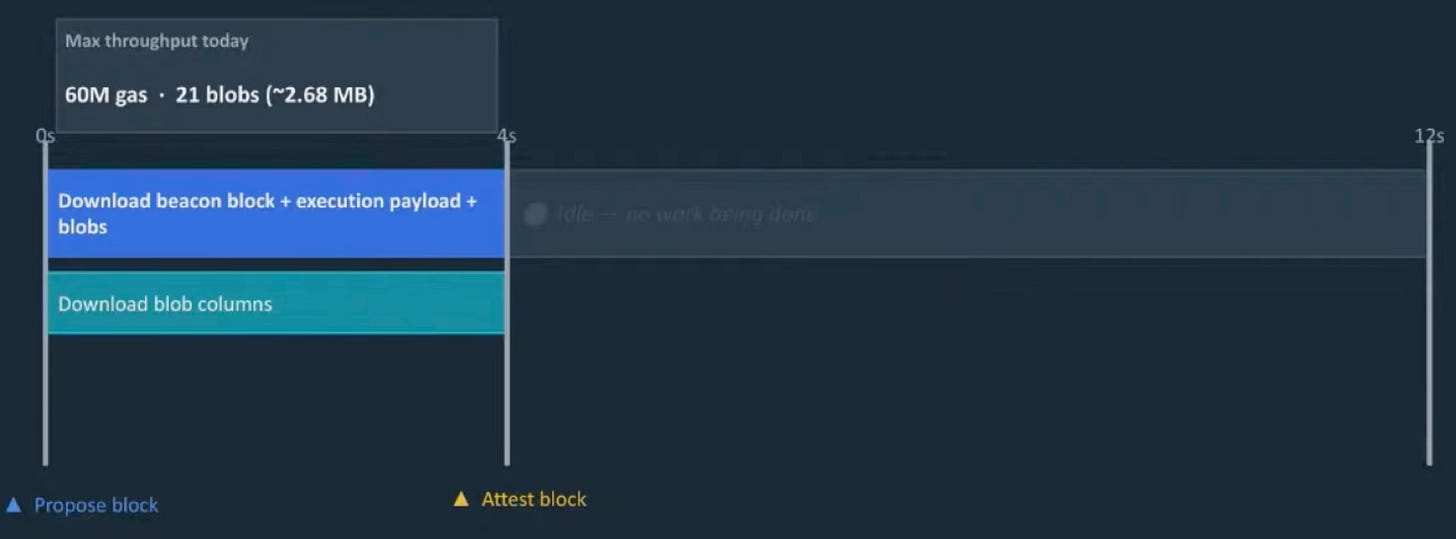
Ethereum makes a block every 12 seconds, but nodes don’t get 12 seconds to check it. Validators vote about 4 seconds into each slot. A block that hasn’t arrived and been checked by then likely gets voted against and can be dropped from the chain. Within those 4 seconds, a node must:
receive and check the consensus block,
receive and execute every transaction in the execution payload,
and confirm that the block’s blob data (the bulk data rollups post to Ethereum) is available.
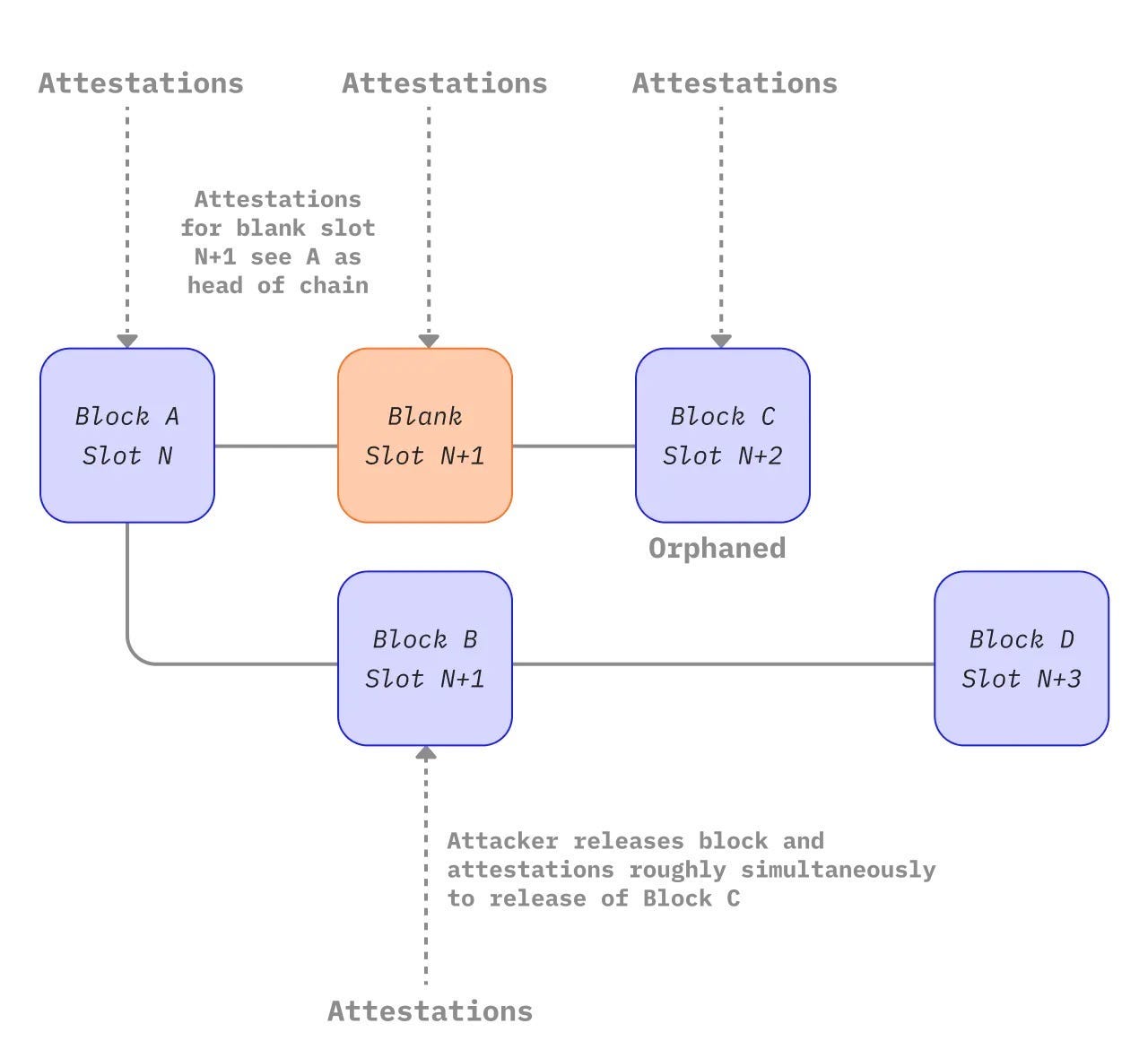
The remaining 8 seconds of the slot are mostly idle. A late block is also dangerous beyond the lost reward: when some validators see a block in time and others don’t, they split their votes. Attackers can exploit exactly that kind of split to destabilize the chain.
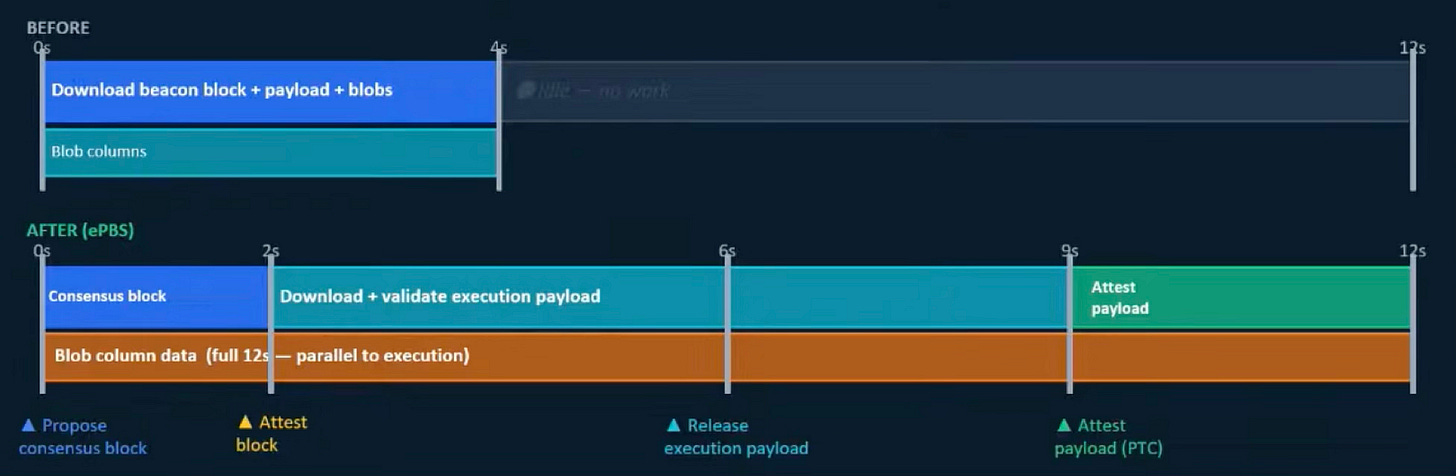
Before ePBS, all verification happens in the first 4 seconds of the slot, and the remaining 8 seconds sit idle. source
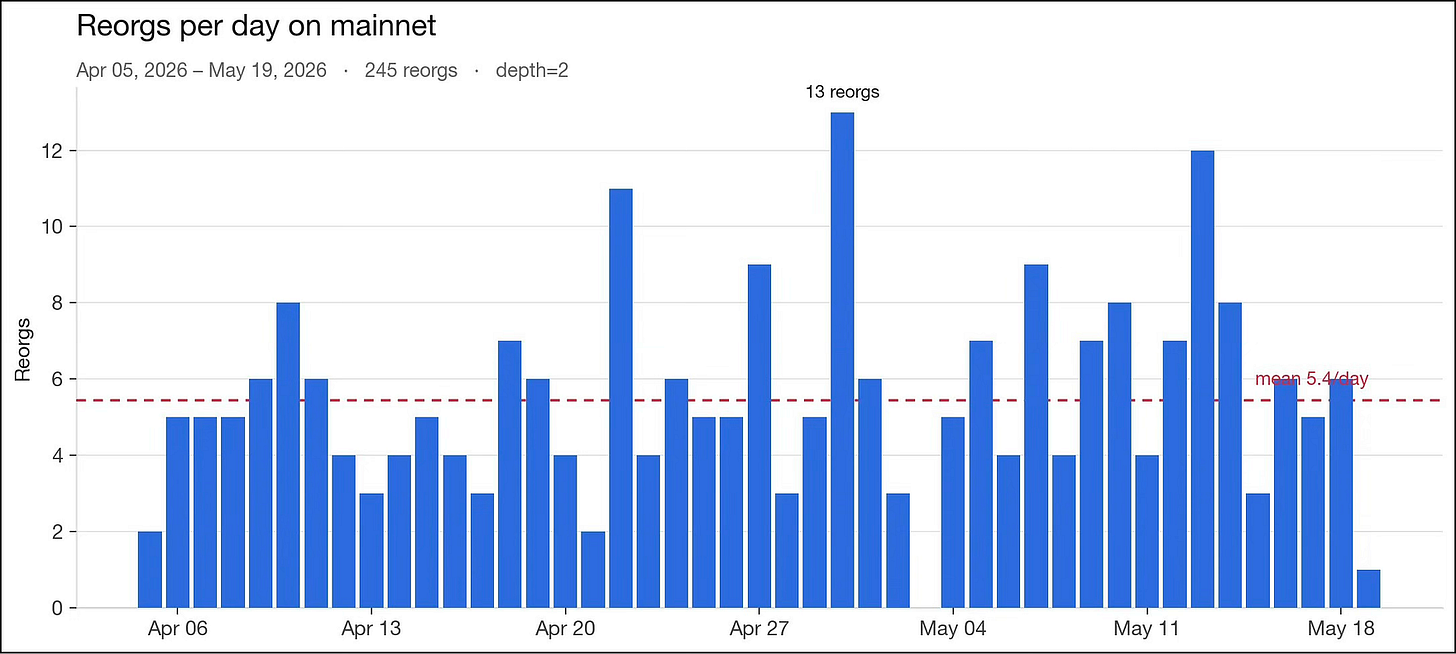
Attackers can time the release of their blocks and attestations to destabilize the chain. source
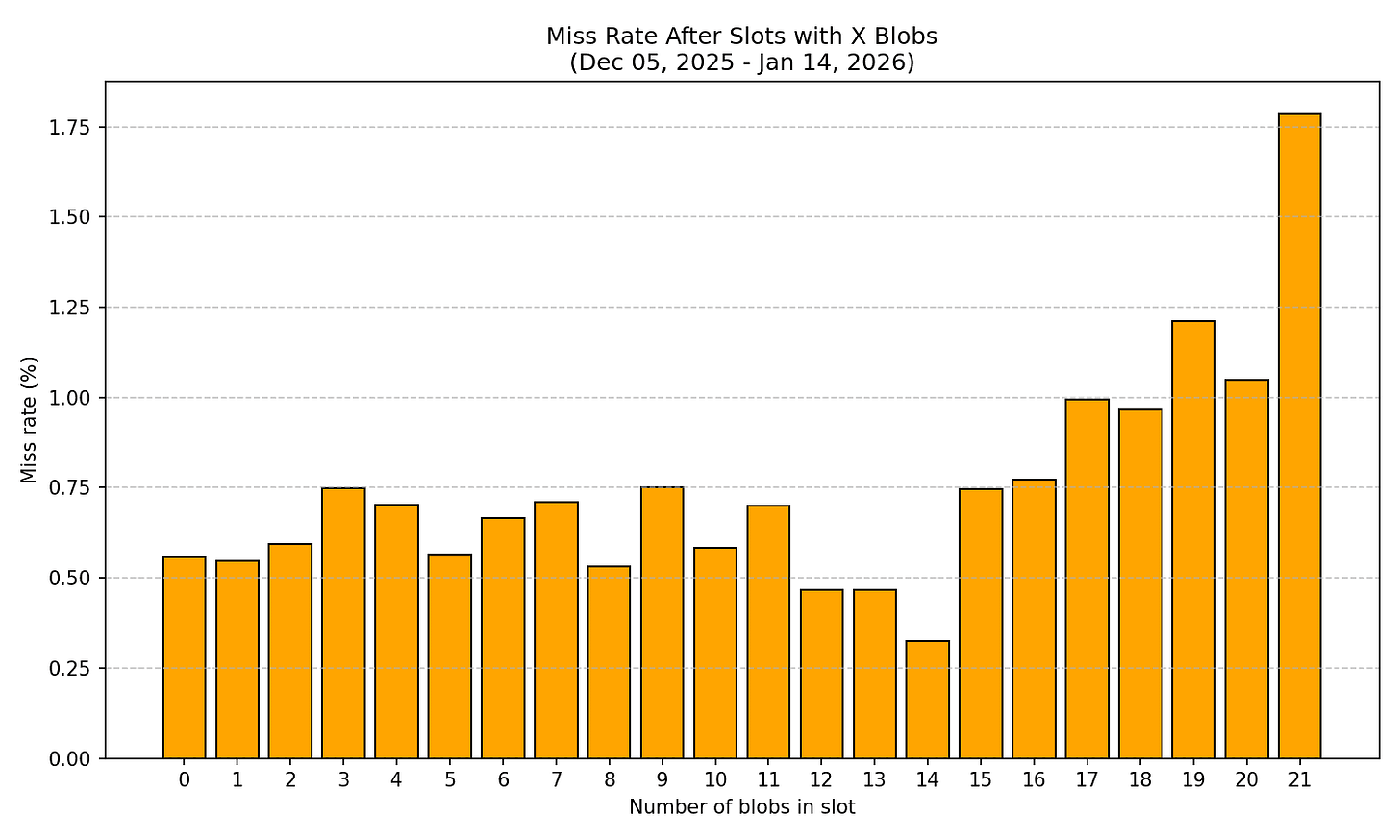
The tightest squeeze today is blob data. A blob is about 128 KB, and a block can carry up to 21 of them, roughly 2.6 MB in total. (Since the Fusaka upgrade, each node only samples a slice of that data using PeerDAS, but the block’s publisher still has to get all of it onto the network at once.) If the data doesn’t spread in time, the block fails. Data suggests blob delays cause about 1% of blocks to be judged invalid.
ePBS removes the squeeze. The consensus block now only needs a quick check of the builder’s bid: is the signature valid, and does the builder have enough stake to pay? That is small and fast, so its voting deadline actually moves earlier, from 4 to 3 seconds. The payload and blobs get the rest of the slot to arrive and be verified.
After ePBS (bottom half), validators have the full slot to verify and vote. source
Before ePBS, everything must be checked in the first 4 seconds; after, only the small bid is, and the heavy payload gets the rest of the slot.
More verification time means blocks can safely hold more. Glamsterdam plans to raise the gas limit, roughly the block’s capacity, from 60M to 200M. Blob capacity is now raised separately through small “Blob-Parameter-Only” (BPO) upgrades. The latest, BPO2, went live in January 2026. BPO3 is being tracked in EIP-8138.
Why Relays Won’t Disappear
To guarantee that winning builders pay, ePBS makes builders stake ETH on the consensus layer, the same way validators do. Builders get their own deposit and withdrawal path, faster than the validators’ one because builders don’t directly secure the chain. They post bids publicly over Ethereum’s peer-to-peer network, and the winning bid is deducted from their stake.
This in-protocol auction is safer, but less convenient for builders:
Capital lock-up. A builder must deposit at least as much as it wants to bid, and staking and unstaking take time.
No risk-free bids. Today a builder can find a 100 ETH arbitrage, bid 99 ETH, and keep 1 ETH. If it loses the auction, nothing happened and it owes nothing. With ePBS, the full bid must be backed by stake up front.
No take-backs. On the public network, a signed bid can’t be lowered or cancelled. With MEV-Boost, builders adjust or withdraw bids constantly as prices move.
Because of this, many builders will likely keep using the existing off-protocol route as well: private bids, adjustable and cancellable, delivered with very low latency. That is exactly the service relays already provide, and ePBS still allows proposers to accept bids from anywhere. The catch is the same as before: anyone using a relay is trusting the relay again.
On top of that, ePBS adds complexity: a new role in the protocol, a new committee, and a new kind of fork-choice reasoning for slots where the payload is missing.
What to Watch
ePBS (EIP-7732) is the headline of Glamsterdam, Ethereum’s next major upgrade. Two open questions will decide how it plays out:
Can the chain handle 200M gas? Bigger blocks raise costs for node operators and grow Ethereum’s state faster (”state bloat”). Both could push smaller operators out.
Will builders use the public auction? If staking and binding bids are too inconvenient, relays and today’s MEV-Boost flow may stay dominant, and with them the trust problem ePBS set out to remove.
Conclusion
PBS kept proposing simple enough for anyone to do, but it left a few relays holding the keys. ePBS moves the referee job into the protocol: builders who win must pay, and proposers can’t steal what they haven’t committed to.
The less obvious win is time. By judging the consensus block and the execution payload separately, ePBS lets nodes use the whole 12-second slot to verify blocks, instead of cramming everything into the first 4 seconds. That room is what lets Ethereum grow its blocks without leaving smaller nodes behind.