
Special thanks to Paweł Bylica, Monika Zając and Martyna Jeuté for the review and the feedback.
TL;DR
Poland has emerged as a significant hub for blockchain and Ethereum development, driven by innovative projects, a strong pool of technical talent and vibrant communities. This deep dive explores the evolution of Poland’s Ethereum ecosystem, from its early days with pioneering projects like Golem and Nethermind to modern contributions such as L2beat’s growth, alongside with other key players and recent developments.
1. The Pioneers: Golem, Ethworks, and Nethermind
1.1 Golem: Decentralizing Computing Power
Golem was founded in 2016 by Julian Zawistowski, Piotr Janiuk, Andrzej Regulski, and Aleksandra Skrzypczak in Warsaw, building on their experience at imapp and the Institute for Structural Research (IBS). The team’s deep involvement with Ethereum core development since 2014, working on EVMJIT and C++ client with ETHDEV, positioned them perfectly to create one of Ethereum’s most ambitious early projects.
Golem raised 820,000 ETH (~$8.2M USD) in a groundbreaking 20-minute ICO in November 2016, creating a global “supercomputer” for rendering and scientific computations. By 2020, the project evolved to “New Golem” with a modular GLM token system, while the Golem Foundation split off to manage over $40 million in assets for research funding.
Golem Ecosystem Fund: backed by 40,000 staked ETH, supports projects like Clan (private device networks) and Web3Pi (accessible Ethereum nodes), advancing AI, analytics, and decentralized infrastructure.
Octant, launched in August 2023 by the Golem Foundation under co-founder Julian Zawistowski, is a decentralized platform using Golem’s GLM token to fund public goods, leveraging 100,000 staked ETH to allocate 70% of yields to user rewards and projects like L2beat, Protocol Guild and the Tor Project.
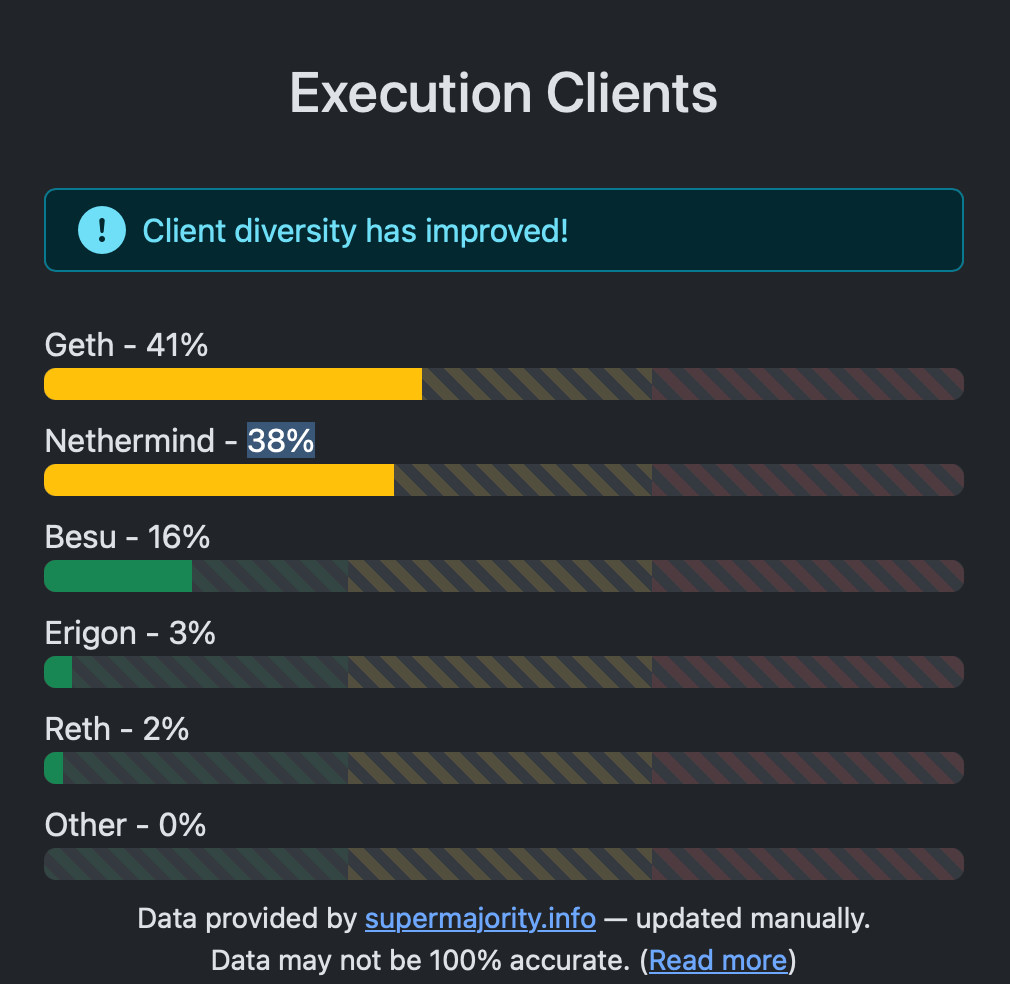
1.2 Nethermind: A true powerhouse in the Ethereum space, Nethermind, though headquartered in London, has deep Polish roots and significant presence there. Their flagship product, the Nethermind Ethereum execution client, is a critical piece of the network’s infrastructure, securing a substantial portion of the Ethereum.
Beyond their client, Nethermind is a leading research and engineering firm, actively contributing to core Ethereum development, Layer 2 solutions like Starknet, institutional DeFi, and cutting-edge cryptography research.
Nethermind employs over 350 team members across 66+ countries, operating with a remote-first model that allows them to attract top talent globally, including a strong contingent from Poland. Their highly successful internship program has successfully cultivated a diverse pool of over 617 talents from 94+ countries since 2021, many of whom transition to full-time roles.
1.3 Ethworks (acquired): As a prominent blockchain development studio based in Warsaw, Ethworks has been instrumental in building and auditing smart contracts, developing decentralized applications, and contributing to the broader Ethereum infrastructure. In September 2021, Ethworks was acquired by TrustToken, the company behind the TrueFi unsecured lending protocol. Despite the acquisition, the legacy of Ethworks’ contributions to open-source projects like Waffle and useDApp continues to benefit Ethereum developers globally.
Marek Kirejczyk, Founder of EthWorks joined TrueFi as a CTO and later started Vlayer Labs, a decentralized data infrastructure platform designed to enable trustless, verifiable data exchanges using zero-knowledge proofs.
2. Policy
Poland has, indeed, taken steps to establish a favorable environment for fintech companies and blockchain startups. While in terms of cryptocurrency, Poland’s approach has been cautious.
For Ordinary Crypto Users and Traders: Crypto is legal but cannot be used for government payments like taxes, though private parties can agree to use it for transactions. Income from the sale of virtual currencies is taxed at a flat rate of 19% and report through PIT-38 forms. There are no border declaration requirements when traveling with crypto, and mining is legal with no specific restrictions beyond general electricity and environmental regulations. All crypto transactions are subject to taxation and must be reported to authorities.
For Business Providers and Crypto Startups: Any entity providing virtual currency services must register in the Polish Register of Virtual Currency Activities operated by the tax authority within 14 days. Companies must implement comprehensive AML/KYC policies, appoint qualified AML officers, establish customer due diligence procedures for transactions over €1,000. Poland is implementing MiCA regulation, which will bring crypto service providers under direct PFSA supervision by July 2026, requiring additional licensing and compliance measures.
3. Other Key Players
3.1 Startups: As Maciej Zawadziński, a serial entrepreneur with three exits to his credit and partner at Hard2beat VC, explained: “Poland’s startup ecosystem has always been about resilience. Founders here have had to be resourceful, overcome capital constraints and think globally from day one…”. Here are some well-known Polish Ethereum startups that embody this spirit:
Ramp: Led by Przemek Kowalczyk, Ramp simplifies crypto on-ramps, boosting ETH adoption. Raised $200M in a Series E round in 2025.
RedStone: A blockchain oracle provider that supplies real-time, reliable data feeds to over 100 decentralized applications across EVM and non-EVM blockchains, securing billions of dollars in value. Founded by Jakub Wojciechowski. $15M in Series A funding.
Vlayer Lab: Co-founded by Hubert Rachwalski and Marek Kirejczyk, vlayer provides smart contracts with access to on- and off-chain data through features such as Time Travel, Teleport, Web Proofs (zkTLS), and Email Proofs (zkEmail). The company raised $10M in a pre-seed funding round.
T1protocol: A Layer-2 infrastructure to solve the fragmentation caused by rollups and aims to restore seamless composability and improve user experience in Ethereum. Raised $2.5M in a pre-seed round.
L2Beat: A Polish-led analytics platform that has become the essential resource for tracking Ethereum’s Layer 2 scaling solutions, providing comprehensive data on value secured, risk analysis, UOPs, and more. Through its transparent methodology and neutral approach, L2Beat helps developers, investors, and users navigate the trade-offs between different L2 solutions, and is the go-to resource for understanding L2 adoption, performance, and risks.
Herodotus: ZK-powered verifiable data and coprocessing for Ethereum and beyond.
Uniqly: A digital layer of technology for physical assets through NFC tech, redeemable NFTs, and storefronts.
Cookie3: AI Data Layer for crypto enterprise analytics across the whole funnel.
Stablewatch: Analytics for stablecoins.
3.2 Communities
ETHWarsaw: An active grassroots Ethereum community in Warsaw, Poland, known for organizing the largest yearly Ethereum conference and hackathon in the country, alongside regular Ethereum meetups.
ETHWarsaw 2025 [4]: 4-7 September 2025.
ETHLegal: A one-day conference for lawyers, scientists, and practitioners to jointly discuss the latest trends, challenges, and regulations in blockchain legal matters.
Kolektyw3: A curated, community-driven space for experimentation, collaboration, and creation in the worlds of blockchain, AI, and decentralized technologies.
zkWarsaw: Warsaw-based community around zero-knowledge proofs. Running events with lectures and workshops for researchers, hackers, and builders.
Blockchain Devs Wrocław: Local blockchain dev community at Wrocław.
thePolacy: A diverse NFT community of traders, artists, memers, and yogis.
3.3 University Initiatives
University courses:
University of Warsaw: Cryptography, Blockchain & Fintech; Blockchain programming; Digital finance.
SGH Warsaw School of Economics: Blockchain Postgraduate Studies - Blockchain: Business, Law, Technology; which also organizes the 1st International Onchain Economy Conference in May 2025.
Research Group & Blockchain Center:
University of Warsaw: Cryptography And Blockchain Group.
Jagiellonian University: Blockchain implication for complex systems.
Łazarski University: Blockchain Technology Center, the first in Central and Eastern Europe and the third in Europe research and education unit dealing with blockchain technology. In October 2023, they opened a new course Financial Technologies courses with a special emphasis on blockchain.
Warsaw University of Technology: Blockchain related research publications.
4. Ethereum Adoption
There is increasing cryptocurrency adoption alongside cautious regulatory oversight. According to the data from statista and Polish Economic Institute, user penetration rate is expected to be 19.32% in 2025 and is forecasted to increase to 20.27% by 2026.
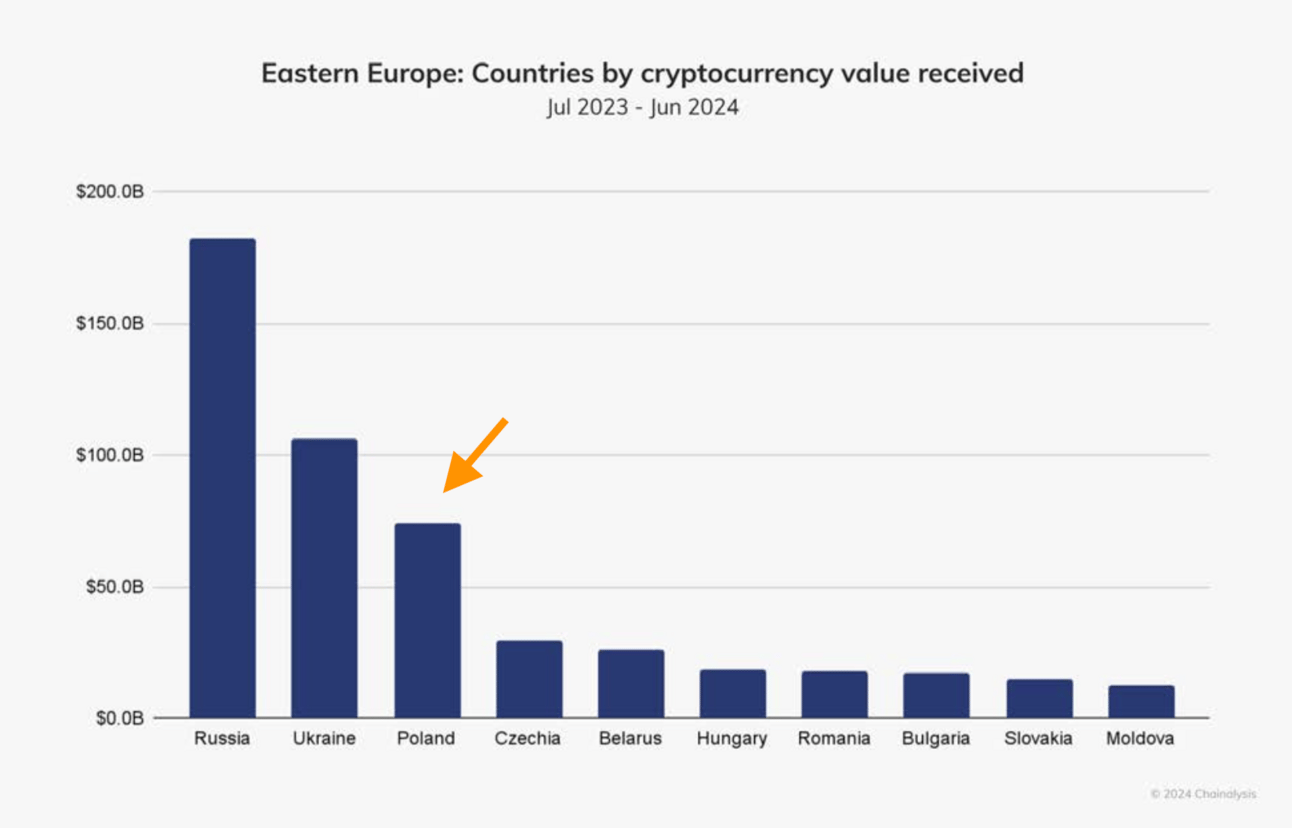
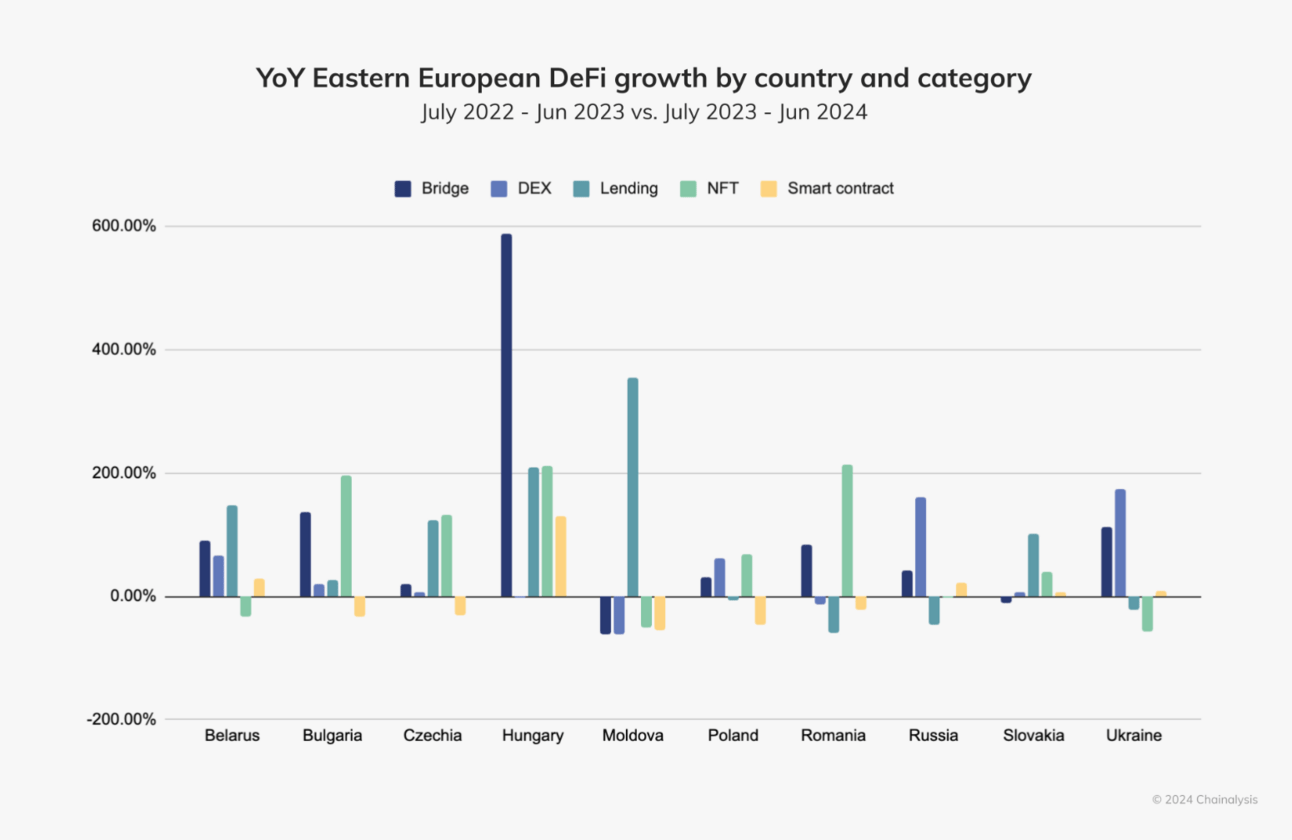
According to Chainalysis’ 2024 analysis, Poland ranks 24th globally in crypto adoption and is among the countries with the greatest cryptocurrency value received and DeFi growth in Eastern Europe, alongside Russia and Ukraine, particularly seeing significant growth in large institutional transfers.
5. Web2 and Web3 Developers
Poland stands out within Europe’s developer community, as highlighted by the 2024 Electronic Capital Developer Survey, which notes a 2% share of global blockchain developers. Beyond projects with Polish roots, Polish engineers are working at some of the best international projects in the Ethereum space, like Ethereum Foundation, MakerDAO, Matter Labs, Starkware, Consensys and more.
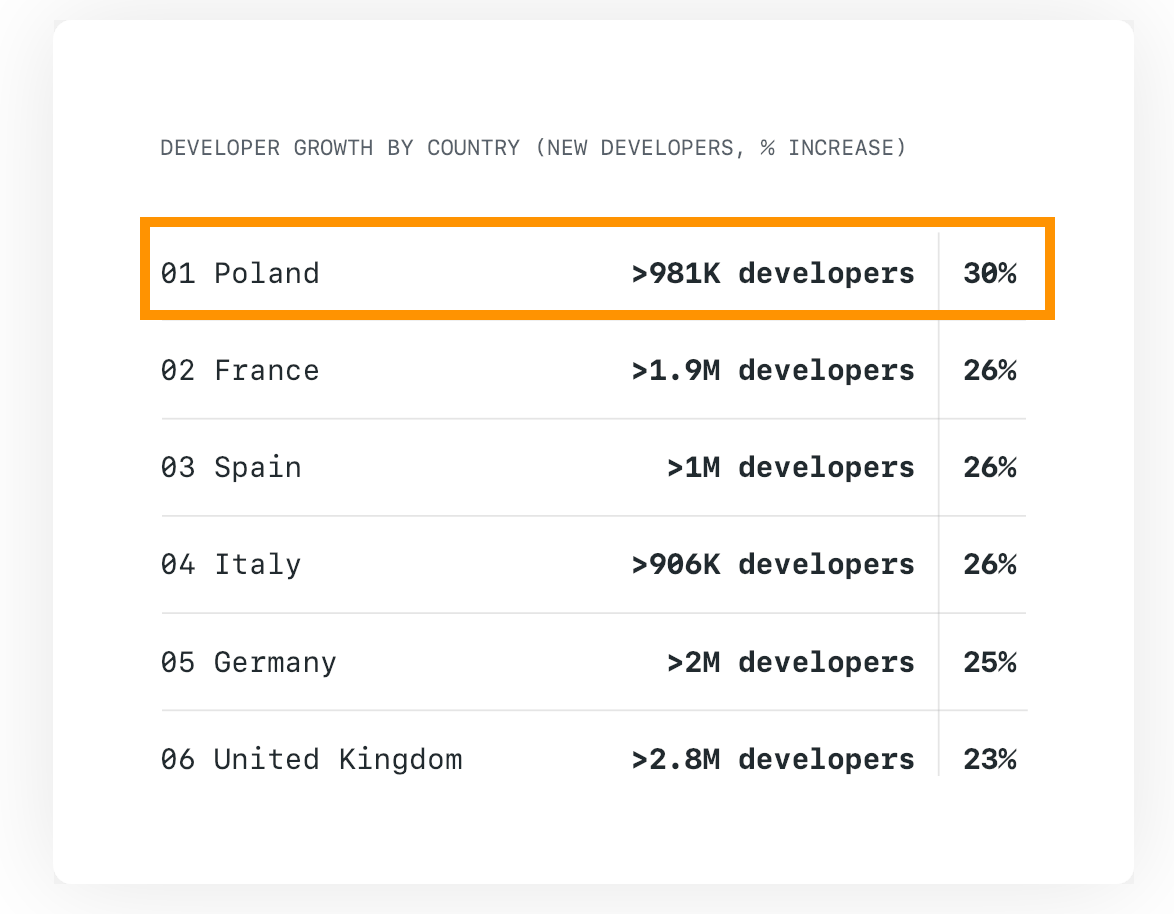
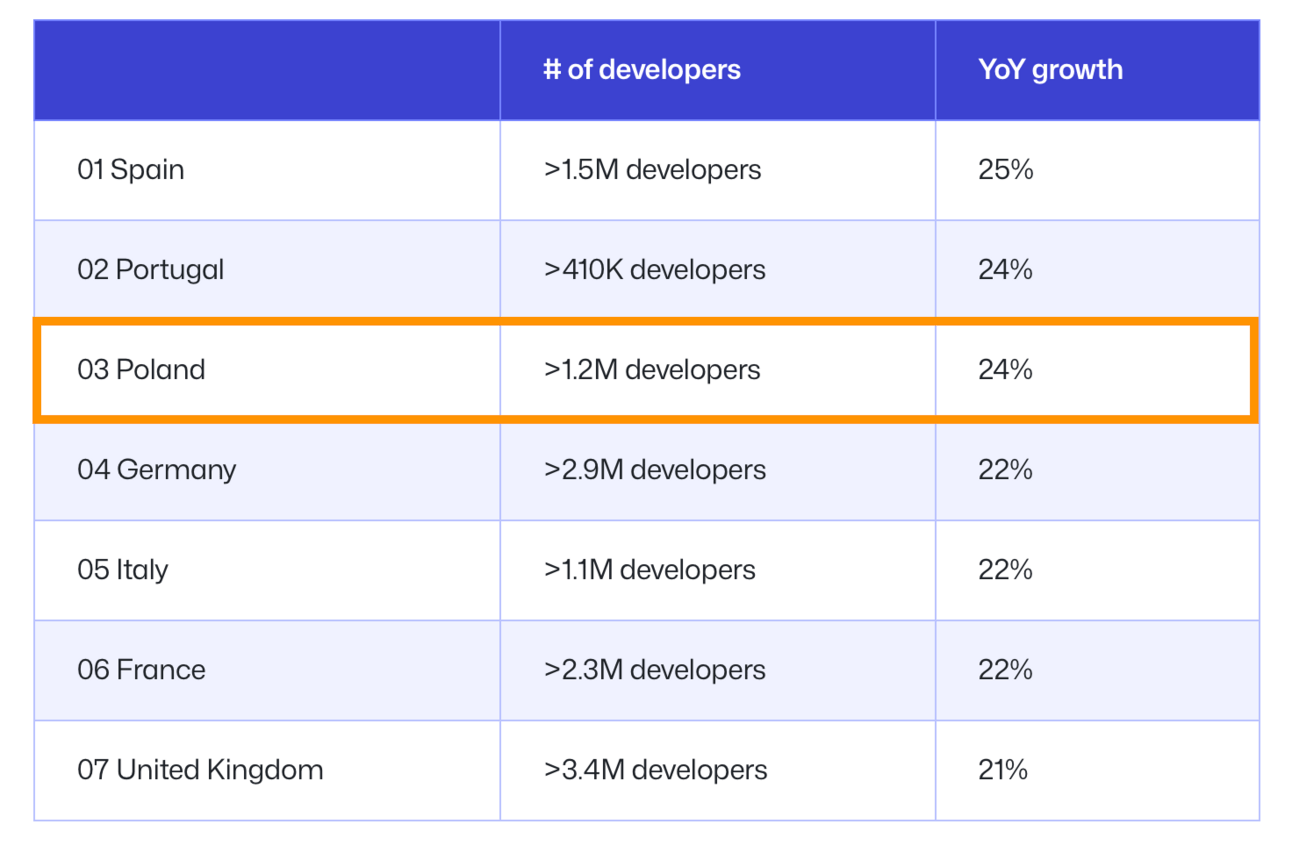
According to the 2022 Octoverse data, Poland led with over 981K new developers and a 30% increase. In 2023, the Octoverse data shows continued growth, with Poland contributing over 1.2M developers and a 24% year-over-year increase.
Further Reading
Golem Blog: So who the heck are we, anyway
Global Legal Insights: Blockchain & Cryptocurrency Laws and Regulations 2025 – Poland
UPay Post: Crypto Adoption Around the World: Poland
Chainalysis: Despite war and regulatory questions, crypto adoption grows in Eastern Europe driven by institutions and DeFi activity
The Recursive: We’re Not Pitching Ice to Eskimos Anymore”: Poland Enters the Scaleup League
Thanks for reading, and have a nice day! 🌸
Best regards,
Riely and the Geode Labs team.
Have any comments or feedback? DM.
Want to advertise on Local Ethereum? DM or Email.
If your company is interested in reaching an audiences of regional community and ecosystem builders, developer communities, universities, startup partners, or policymakers, you may want to advertise with us.

Riely
Riely is the Editor in Chief of Local Ethereum, covering Ethereum and crypto adoption stories from around the world. Based in Berlin, she covers stories from India, Argentina, Poland, Taiwan, Serbia, and beyond, with a focus on how decentralized technology intersects with local culture, economics, and politics.
Published March 2, 2026 · 7 min read
Local Ethereum
Enjoying the read? Get this in your inbox.
In-depth Ethereum ecosystem coverage: regional deep dives, monthly roundups, and global analysis. Twice a month, free.
Subscribe, it's free